
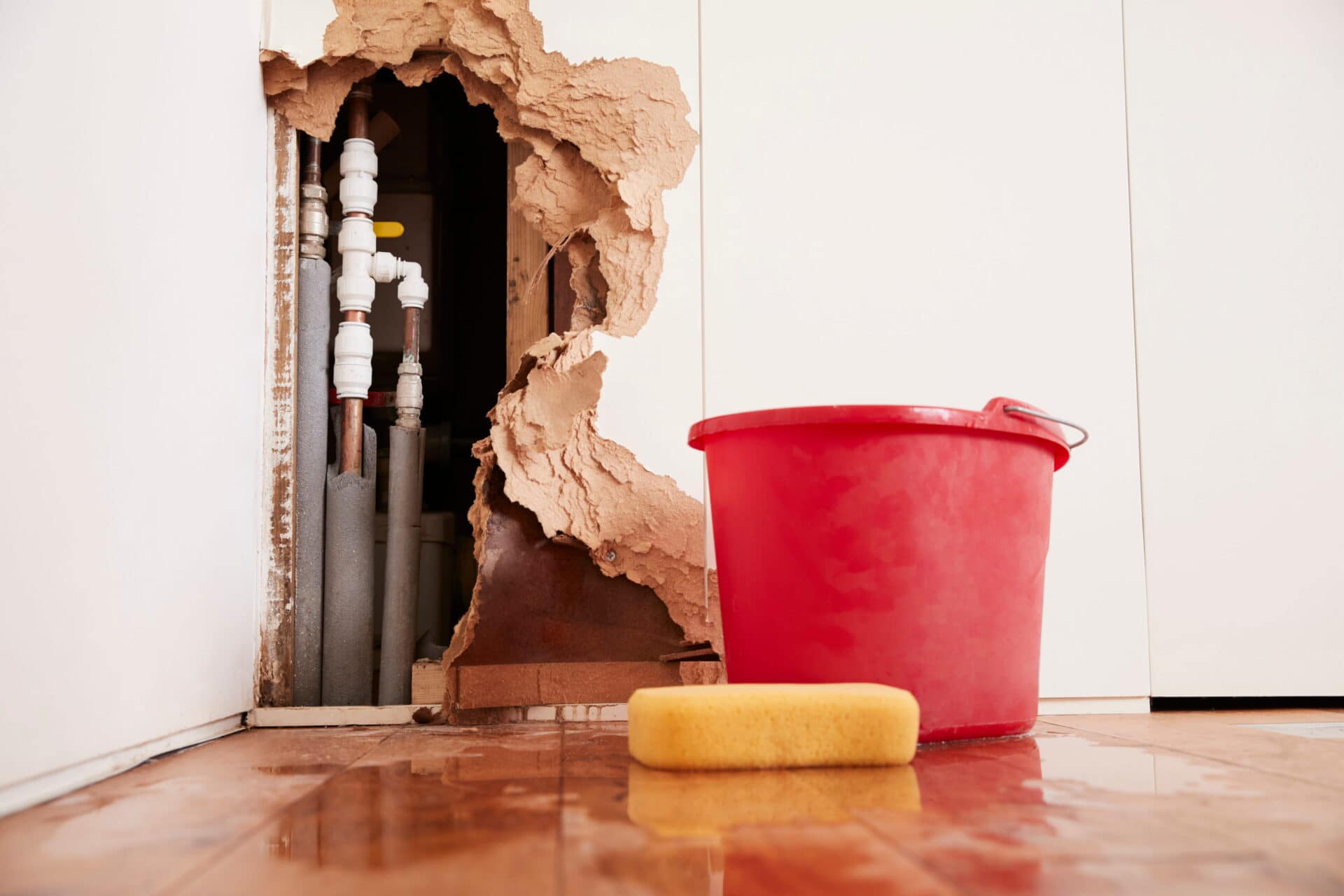
A burst pipe can turn an ordinary day into a full-scale emergency in minutes. Whether it occurs during a winter freeze, due to aging plumbing, or from an unexpected pressure buildup, the resulting water damage can spread quickly through floors, walls, and ceilings. For homeowners in Eastern Pennsylvania, Northern Delaware, and New Jersey, where seasonal temperature swings are common, burst pipes are a frequent and costly issue.
Knowing how to respond immediately and when to call professionals can significantly reduce damage, repair costs, and the risk of mold growth. This guide explains how to safely manage water damage caused by burst pipes, what steps to take right away, and how professional emergency flood cleanup can help protect your home.
Why Burst Pipes Are So Damaging
Burst pipes are particularly destructive because water flows freely and often goes unnoticed until damage is extensive. A pipe hidden behind a wall or ceiling can leak for hours before signs of a leak appear, saturating building materials along the way. Once a pipe bursts, water can soak drywall, insulation, wood framing, flooring, and personal belongings, creating ideal conditions for mold within 24-48 hours.
Common causes of burst pipes include:
- Freezing temperatures, which cause water inside pipes to expand and crack the pipe
- Aging or corroded plumbing, especially in older homes, is common throughout PA, NJ, and DE.
- High water pressure, which weakens pipe joints over time
- Improper installation or past repairs
What To Do Immediately When a Pipe Bursts
Fast action is critical. The steps you take in the first hour can dramatically limit damage.
1. Shut Off the Main Water Supply
The first and most crucial step is to stop the flow of water. Locate your home’s main shut-off valve and turn it off immediately. This valve is typically found in a basement, crawl space, utility room, or near the water meter. If you are unsure where your shut-off valve is, it is a good idea to locate it now before an emergency occurs.
2. Turn Off the Electricity in the Affected Area
Water and electricity are a dangerous combination. If water is near outlets, appliances, or electrical panels, shut off the power to the affected areas at the breaker and avoid standing water if electricity is still on. If you are unsure whether it is safe, do not enter the area; instead, call a professional
3. Drain the Plumbing System
Once the water is off, open all faucets and flush toilets. This helps drain remaining water from the pipes and reduces pressure that could worsen the damage or cause additional leaks.
4. Identify the Source of the Leak
If the burst pipe is visible and accessible, take note of its location. However, do not attempt major repairs yourself unless you are trained to do so. Temporarily placing a bucket under a drip will work, but a licensed plumber should handle permanent repairs.
Managing the Water Damage Safely
After the immediate threat is under control, the focus shifts to minimizing damage and preventing mold.
1. Remove Standing Water
Standing water should be removed as quickly as possible. The longer water sits, the deeper it penetrates materials like wood, carpet padding, and drywall.
Use mops, towels, or a wet/dry vacuum for small areas. You should avoid using household vacuums that are not designed for water.
2. Move and Protect Belongings
Move furniture, electronics, and personal items out of the affected area if it is safe to do so. You should immediately relocate important documents and valuables to a dry, well-ventilated space. For items too heavy to move, place foil or blocks under furniture legs to reduce water absorption.
3. Begin Drying the Area
Drying is one of the most critical steps in preventing long-term damage and mold growth. Open windows when the weather permits and use fans and dehumidifiers to reduce moisture levels.
However, surface drying alone is often not enough. Water can remain trapped behind walls, under floors, and in insulation. Areas that require professional-grade equipment to dry properly.
Why Professional Emergency Flood Cleanup Matters
While homeowners can manage minor water incidents, burst pipes often require professional emergency flood cleanup to fully address hidden moisture and prevent future problems.
Professional restoration teams use commercial-grade water extraction equipment, industrial dehumidifiers and air movers, and moisture meters and thermal imaging to detect hidden water.
This thorough approach helps ensure all affected areas are properly dried, reducing the risk of structural damage and mold growth. For homeowners across Eastern PA, Northern DE, and New Jersey, quick access to local emergency flood cleanup services can significantly reduce recovery time and repair costs.
Mold Risks After a Burst Pipe
Mold is one of the most common secondary issues following water damage. Once moisture is present, mold spores, which naturally exist in the air, can begin to grow rapidly on drywall, wood, carpet, and insulation. Professional mold inspection and remediation ensure affected materials are safely treated or removed, helping protect indoor air quality and prevent recurring issues.
Signs of mold after water damage may include:
- Musty or earthy odors
- Discoloration on walls and ceilings
- Increased allergy-like symptoms
Documenting Damage and Insurance Claims
Most homeowners’ insurance policies cover sudden and accidental water damage caused by burst pipes. Contact your insurance provider as soon as possible. Many restoration companies can also help coordinate documentation to streamline the claims process.
To support your claim:
- Take photos and videos of all affected areas
- Document damaged belongings
- Keep receipts for emergency services or temporary repairs
Preventing Future Burst Pipes
While not all pipe failures can be avoided, proactive steps can reduce risk:
- Insulate exposed pipes in basements, crawl spaces, and garages
- Keep indoor temperatures consistent during cold weather
- Allow faucets to drip slightly during extreme freezes
- Seal drafts near plumbing lines
- Schedule routine plumbing inspections
Smart leak detection systems and automatic water shut-off valves can also provide early warnings and help prevent extensive damage.
When to Call Tri State Mold Doctors
If your home has experienced water damage from a burst pipe, fast professional help is essential. Tri-State Mold Doctors provides emergency flood cleanup and mold remediation services throughout Eastern Pennsylvania, Northern Delaware, and New Jersey, helping homeowners respond quickly and recover safely.
Whether you are dealing with standing water, hidden moisture, or concerns about mold, our team offers free consultations to assess the situation and recommend next steps with no obligation. Don’t wait for water damage to turn into a mold problem.
If a burst pipe has affected your home, contact us for fast, reliable emergency flood cleanup and expert guidance. A free consultation can help you understand the extent of the damage and protect your home before the problem escalates.