
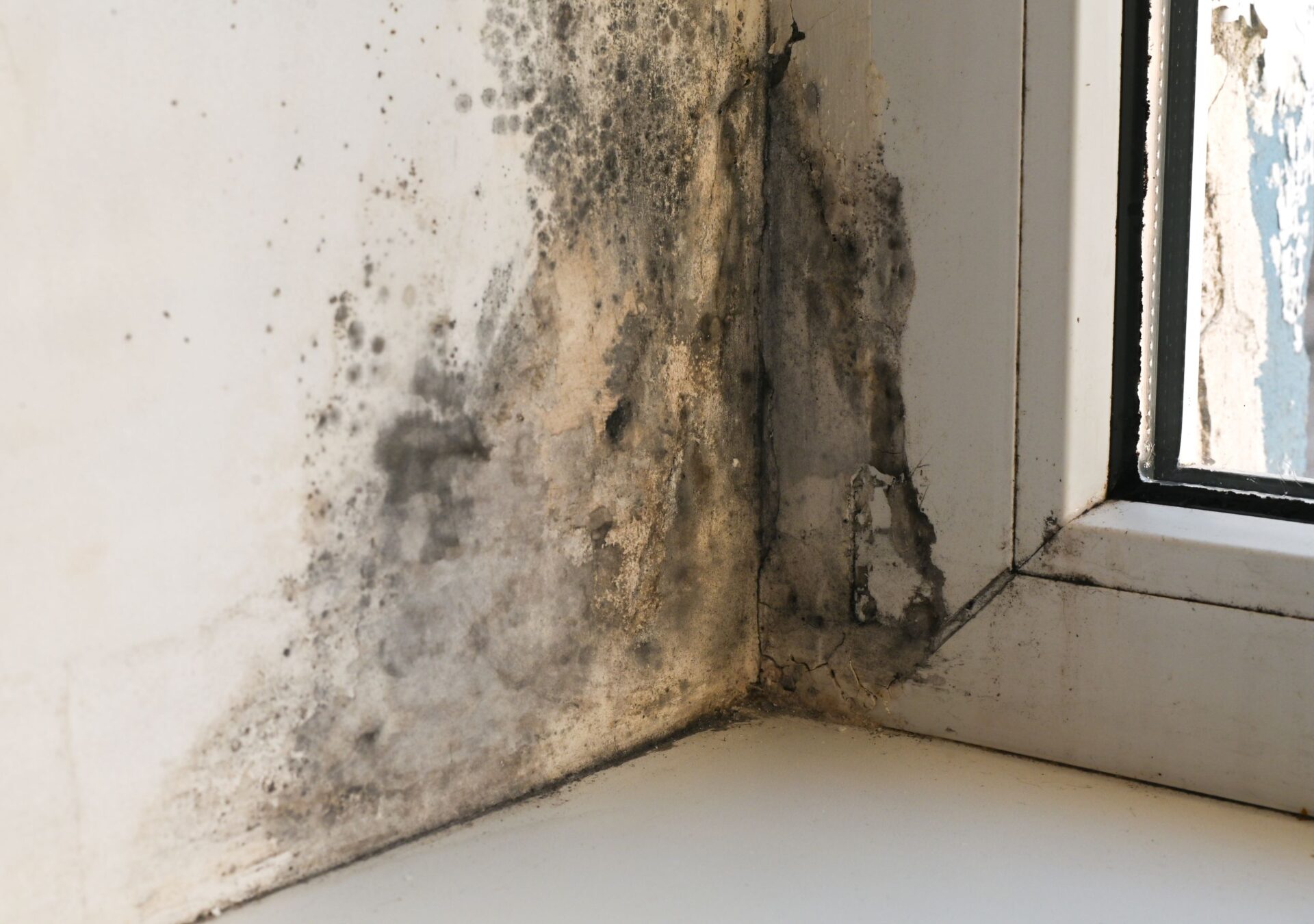
When you discover a dark spot on a bathroom wall, a musty smell in the basement, or discoloration after a leak, it is easy to assume you are dealing with mildew. But what looks like a simple cleaning problem may actually be mold, and the difference matters.
Mold and mildew are both fungi that thrive in damp environments, but they can behave differently and may require different approaches to address them. More importantly, moisture problems that are not properly addressed can lead to continuing property damage, structural concerns, and more extensive remediation.
Understanding the difference between mold and mildew and knowing what to do after water damage can help protect your property. Taking action early can also help prevent a small moisture issue from becoming a larger and more costly problem.
What Is the Difference Between Mold and Mildew?
Mildew is generally considered a type of fungal growth that develops on the surface of damp materials. It is often associated with bathrooms, window sills, fabrics, and other high-humidity areas. Mildew may appear white, gray, or light colored and can sometimes have a powdery appearance.
Mold is a broader term for fungal growth that can develop on many different materials. Mold may appear in a variety of colors, including black, green, brown, white, or gray. Unlike a small amount of surface mildew, mold can penetrate porous materials and spread when moisture remains unresolved.
The appearance alone, however, is not always enough to determine exactly what you are dealing with. That is why attempting to identify and treat a serious mold problem based solely on what you can see may not be the best approach. A professional assessment can help identify the extent of the moisture problem and determine what steps are necessary.
Why Moisture Is the Real Problem
Whether you call it mold or mildew, moisture is often the underlying issue. A leaking pipe, roof leak, appliance failure, basement seepage, overflowing toilet, storm, or other water event can introduce significant moisture into a property.
If water is not removed and affected materials are not thoroughly dried, the conditions can become favorable for microbial growth. This is one reason emergency water extraction and cleanup are so important.
The goal after water damage is not simply to remove the water you can see. Professionals need to evaluate where moisture has traveled, including areas beneath flooring, behind walls, inside ceilings, and in other places that may not be obvious.
Don’t Ignore a Musty Smell
One of the most frustrating things about moisture damage is that the problem may not always be visible. A musty or earthy odor can be a warning sign that moisture or microbial growth is present somewhere in the property. You may notice the smell in a basement, crawl space, bathroom, attic, or room affected by a previous leak.
Even if visible growth appears limited, the source of the moisture still needs to be addressed. Simply painting over a stained wall, spraying a household cleaner, or covering up an odor does not necessarily solve the underlying problem. If moisture remains, the problem may return.
What Should You Do After Water Damage?
If your property experiences a significant water event, acting quickly can make a major difference. Start by addressing the water source if it is safe to do so, then contact a professional water damage restoration company as soon as possible. The property should be assessed for standing water, moisture levels, affected materials, and potential secondary damage.
Professional equipment and moisture monitoring can be particularly important when water has entered materials that cannot be adequately dried with household fans or dehumidifiers. These tools can help identify hidden moisture and ensure that affected areas are thoroughly dried before mold or further damage can develop.
Does Insurance Cover Water Damage in PA?
One of the most common questions homeowners have after a water emergency is: Does insurance cover water damage in Pennsylvania? The answer depends on the cause of the damage and the specific policy.
For example, Pennsylvania’s Insurance Department explains that homeowners insurance can provide coverage for the dwelling and certain property damage, but common exclusions include flood damage. Standard homeowners or renters policies generally do not cover damage resulting from flooding.
This distinction is important because water damage and flood damage are not necessarily the same thing from an insurance perspective. A sudden plumbing failure may be treated differently from water entering a property because of a flood. Coverage can also depend on policy language, exclusions, endorsements, deductibles, and the circumstances surrounding the loss.
If you have experienced water damage, contact your insurance company or agent to determine what your policy covers. At the same time, don’t delay necessary mitigation while determining coverage. Preventing additional damage is an important part of responding to a water emergency.
Homeowners Insurance and Flood Damage in New Jersey
The New Jersey Department of Banking and Insurance states that standard homeowners policies exclude water damage from flooding and that flood insurance is a separate form of coverage. New Jersey homeowners should pay particular attention to the difference between water damage and flooding. They should not automatically assume their homeowners policy will cover damage from rising or accumulating floodwater.
If you are wondering about homeowners insurance flood NJ coverage, review your policy and speak directly with your insurance professional before a disaster occurs. Flood insurance generally needs to be purchased separately, and policies may have waiting periods before coverage takes effect.
Understanding Water Damage Insurance Coverage in Delaware
The same distinction applies in Delaware. The Delaware Department of Insurance states that standard homeowners insurance policies do not protect against floods. Separate flood insurance may be available through the National Flood Insurance Program or private insurers.
So if you are researching water damage insurance coverage in Delaware, don’t assume that every type of water intrusion is covered in the same way. A burst pipe, roof leak, plumbing problem, storm-related issue, and flood can have very different insurance implications: your policy and the cause of the loss matter.
Flood Insurance vs. Homeowners Insurance: Why the Difference Matters
The simplest way to think about flood insurance vs. homeowners insurance is that they are designed to address different risks. When disaster strikes, understanding this distinction can help you make informed decisions about both mitigation and insurance claims.
Homeowners insurance can cover certain types of sudden and accidental property damage, depending on the policy. Flood insurance is specifically designed to address qualifying flood losses. Pennsylvania, New Jersey, and Delaware insurance authorities all emphasize that standard homeowners insurance generally does not cover flood damage.
When Should You Call a Professional?
A small amount of surface mildew in a well-ventilated bathroom may sometimes be manageable with routine cleaning. But professional help becomes particularly important when you have:
- Significant or recurring mold growth
- A history of water damage
- Standing water or extensive moisture
- Mold inside walls, ceilings, flooring, or other inaccessible areas
- Persistent musty odors
- Basement or crawl space moisture
- Damage following a storm or flood
- Water-damaged materials that cannot be thoroughly dried
- A large affected area
- Concerns about spreading contamination
The goal of professional remediation is not simply to make mold disappear from view. It is to address the affected area, control the conditions that allowed the growth to occur, and help prevent the problem from continuing.
Professional Restoration for Water, Mold, and Fire Damage
Tri State Mold Doctors provides restoration services for homeowners and businesses throughout its defined Tri-State service area of Eastern Pennsylvania, Northern Delaware, and New Jersey.
Our key services include:
- Emergency Water Extraction & Cleanup – Removing standing water, stabilizing affected areas, drying the property, and helping prevent secondary damage following a water emergency.
- Mold Remediation & Removal – Assessing mold-related concerns, containing affected areas, removing contamination, and addressing the moisture conditions contributing to the problem.
- Fire Cleanup – Cleaning and restoring properties following fire and smoke damage. Fire restoration can involve specialized techniques and equipment because smoke, soot, odor, and damaged materials can create complex restoration challenges.
Don’t Let a Small Moisture Problem Become a Major Restoration Project
Whether you are dealing with what appears to be mildew, a musty odor, visible mold, or the aftermath of significant water damage, addressing the underlying moisture problem is essential. What may seem like a minor issue can become more extensive when moisture remains hidden in walls, flooring, ceilings, or other materials. If you are unsure whether you are dealing with mold or mildew, or your property has experienced water, mold, or fire damage, professional assessment and restoration can provide the expertise and equipment needed to address the problem properly.
Tri State Mold Doctors is here to help homeowners and businesses throughout Eastern Pennsylvania, Northern Delaware, and New Jersey respond to water, mold, and fire damage. Our experienced team can help assess the damage, identify moisture concerns, and take the appropriate steps toward restoring your property.
Contact us today to get the help you need to move forward with confidence.